About me
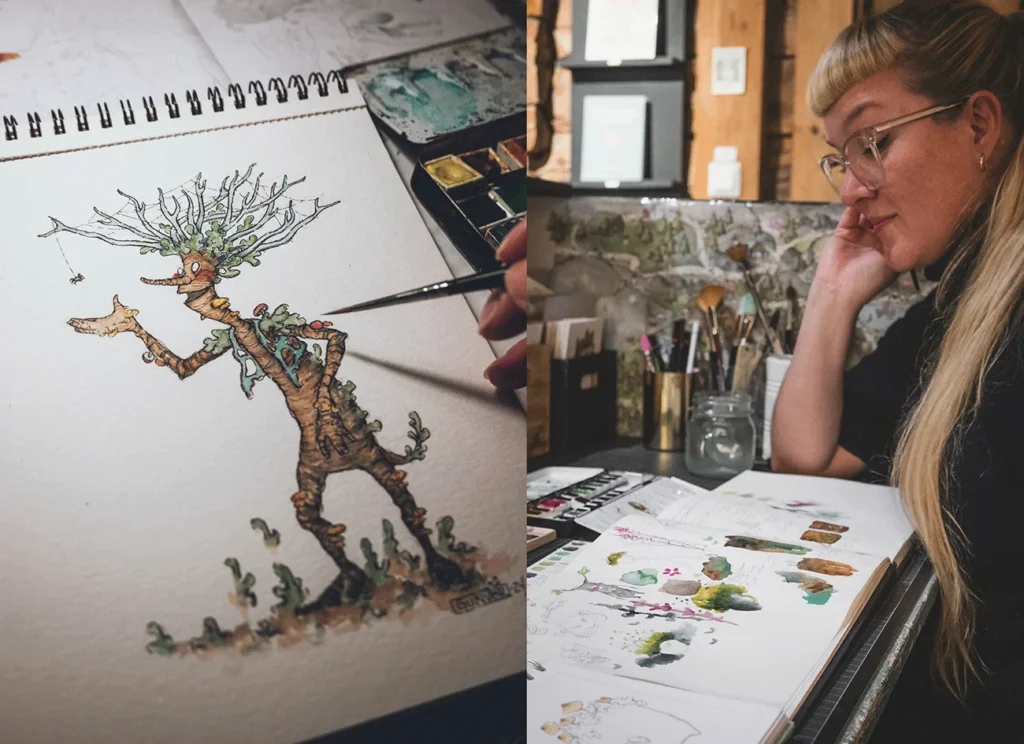
 am Gunvor, an illustrator based in Bergen, Norway. I run my own gallery and studio at Bryggen, a UNESCO World Heritage Site. I make all my illustrations by hand in watercolour and ink, and have done so since 2006, when I (while still in school) started my career as an editorial illustrator for Bergens Tidende.
Since then, my work has taken me in many directions: illustrated books, stage productions, live illustration at jazz festivals across Norway and Switzerland, TV, board games, and a growing collection of products you can find in my shop. Some of my clients include NRK, TV2, Festspillene i Bergen, 7Fjell Bryggeri, Fløybanen, Sissel Kyrkjebø, KODE, and a respectable pile of Norwegian publishers.
Where I live, nature is steeped in myths and folklore, and growing up with stories of trolls and skrømt has shaped how I work and the themes I work with.
My studio at Jacobsfjorden 6-7A is both a working space and a gallery, so come by if you’re out and about. Everything is made locally, and I work with local vendors for printing, materials, and production.
Q & A
How did you become an illustrator?
This is a question I’m asked a lot, so I’ll try to answer it here. I’ve gathered questions from visitors to my gallery, from clients, from students interviewing me, and from social media.
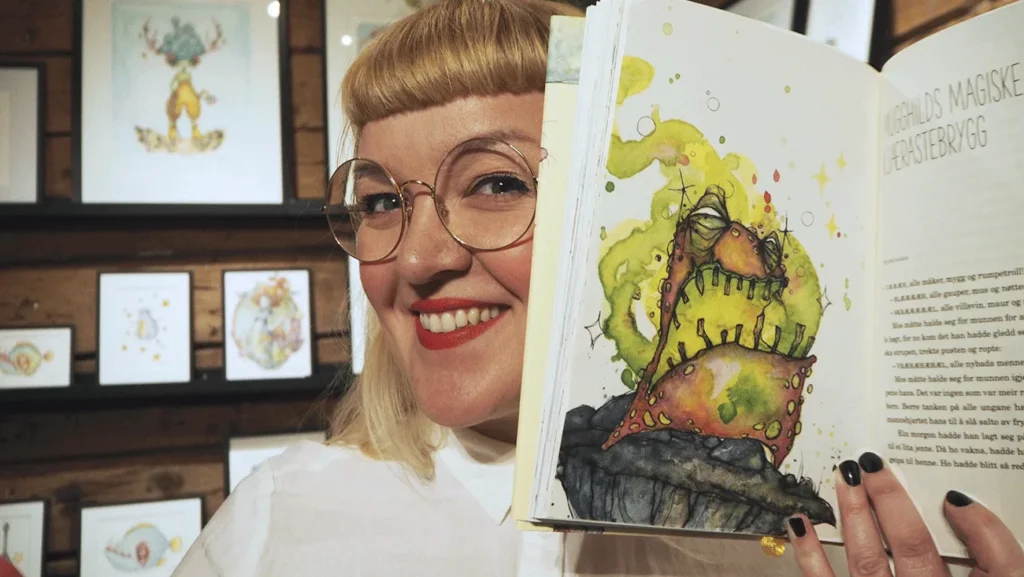
I’ve always drawn
I grew up in a creative family where both my parents drew, influenced by fairytales and fashion illustration. So I drew, painted, inked, and played around for hours and hours with technique, drew fairytale creatures, drew fashion poses, drew from Disney movies, drew from comics, messed around with paint, and generally had a splendid time teaching myself illustration styles.
I had access to art equipment
Good art equipment. Not necessarily expensive tools, but good quality ones. Mechanical pencils and good HB, 2B and 3B pencils, my Alf Bjercke brushes, and Rembrandt, Winsor & Newton, and Schmincke watercolour pans. To master and then improvise (in this case watercolours) I needed good brushes and artist quality paints. Everything else was just annoyingly in my way to make what I wanted. More about my art equipment here.
I was encouraged to apply for an education in art
It does help when carving out a career path, that the environment you’re in is not only supportive of your interests, but loves the idea of you becoming an artist. I think my squad knew I’d be unhappy if not.
I went to art schools
But, that doesn’t necessarily reflect my full skill set. I learnt a lot from just drawing, from my parents, from artist friends and colleagues, from general nerdness, from just doing the job, as well as courses in school with hands on printmaking, graphic design, typography and visual communication.
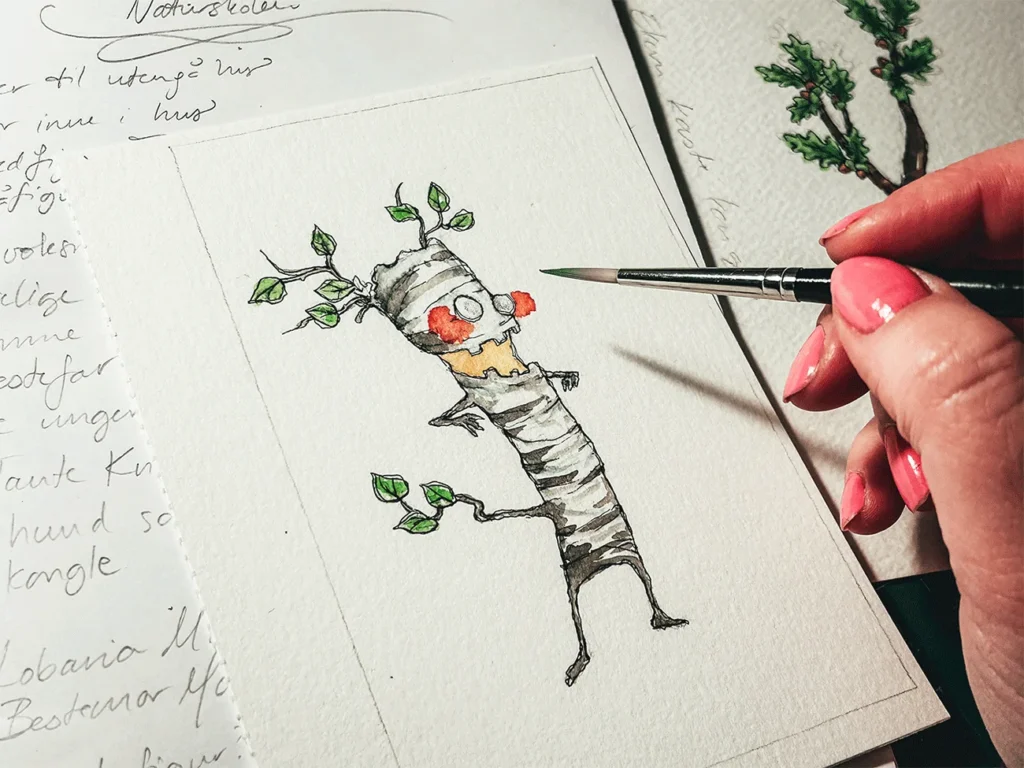
How did you find your own unique style?
I developed my inked art style before I started studying, from just drawing and drawing and drawing (and loving comics), and when meeting other students with other style influences I was nudged in a more colourful direction.
When did you decide to become an artist?
I never stopped. The creative outlet we rediscover as adults is just playing around and finding out, as most kids do. And that’s the great secret. Playfulness becoming creativity. I’ve met people that marvel at my schools and certificates thinking they’re the artist hatching ground, and during the same conversation waft away the idea of kids playing, exploring and being creative as something to keep them occupied while grown ups hatch into authors, designers, and musicians at their various schools. Beats me why they don’t see the connection. The more fun questions about schools or courses are to mull over “Where did you develop as an artist”, “What school poked your creative embers best?”, “How did you fall in love with this and this technique?”
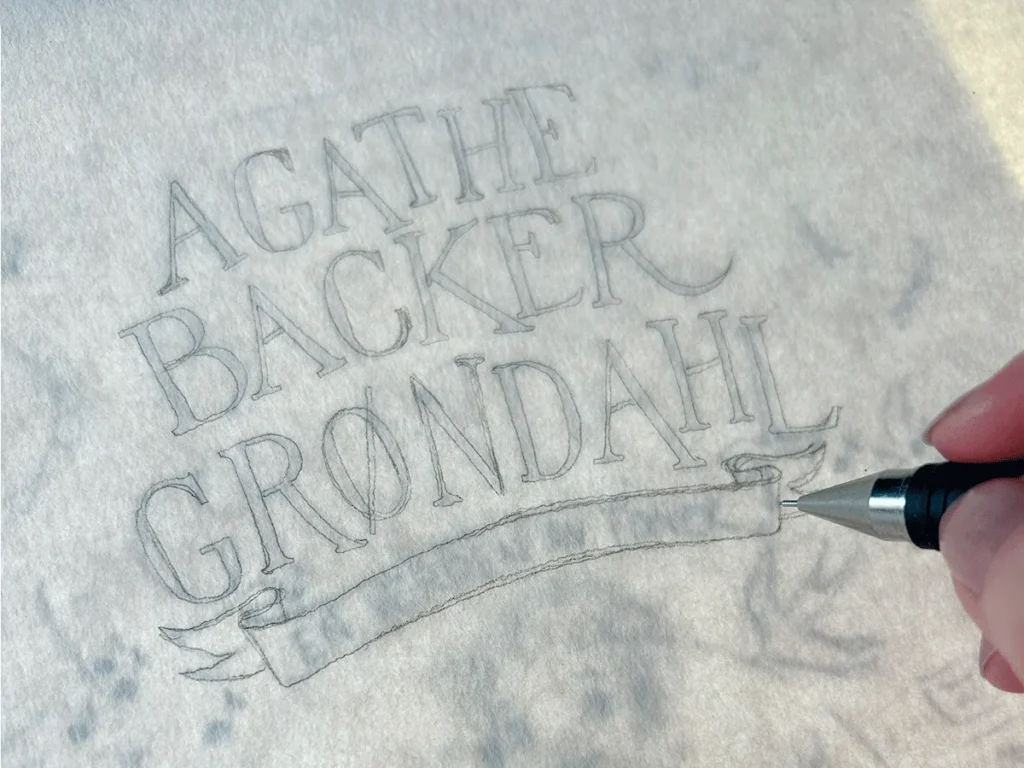
I think that my schools were catalysts for artistic development and where I could fully immerse myself in nerdy machinery like Gutenberg presses, etching techniques and coding, not a place where I first learnt to be an artist. Developed yes, but not the place I started. So I never really went for it, or took the leap, just sauntered from a child, then teen, then adult, stumbled, snowballed, frog jumped, ran, crawled along the squiggly path to working as a full time illustrator and owning a gallery. My official starting out date is June 2006 when I started my company and sent an invoice, and bought www.gunvor.no.
Equipment
What equipment do you use?
Brushes, pencils, software, cameras and pens. All listed below.

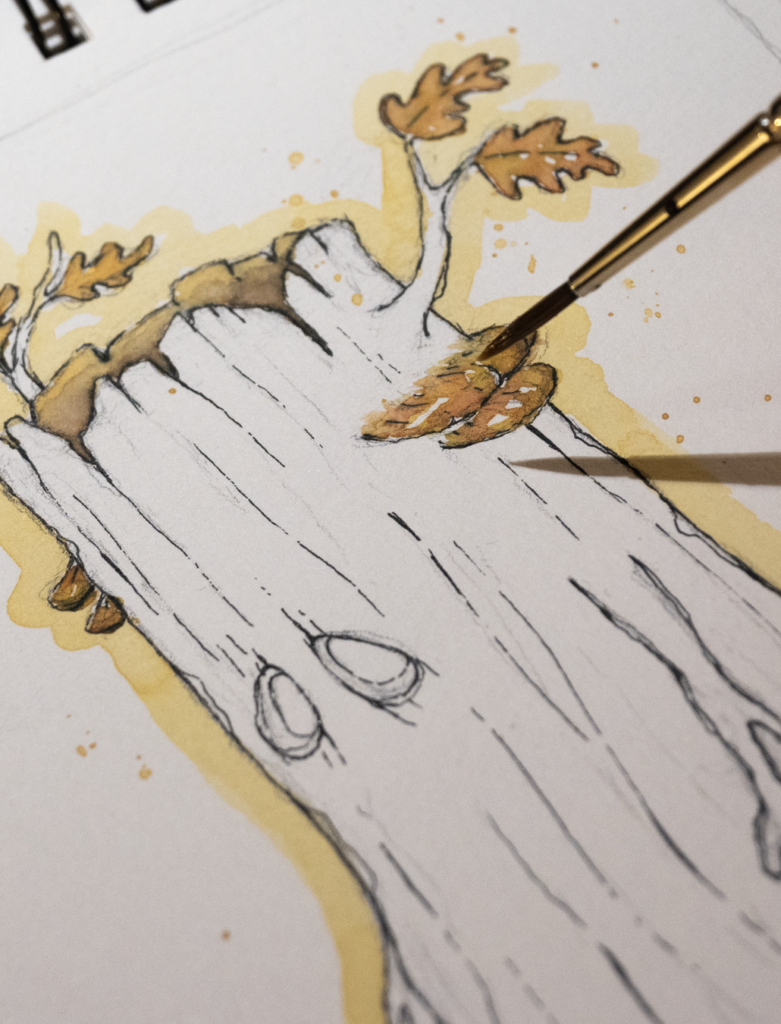
Watercolour
Half pans from Schmincke, Winsor & Newton, Sennelier and Rembrandt. All artist quality and picked one by one into my cases. The basic colour palette I use is Quinacridone Gold, Magenta, Turquoise Light and Lamp Black, with additional colours like Payne’s Grey, Indigo, Burnt Umber, Chromium Oxide Green, Olive Green, Lemon Yellow and White. I also have variations within these so that I have some colours that are consistent when I work with several scenes with the same characters. This is so that I don’t have to spend time with hit and miss when blending colours on tight deadlines.
Brushes
My brushes have been the same since I borrowed my mum’s brushes. I use Alf Bjercke synthetic watercolour brushes in different sizes. The point is so fine on high quality brushes so I don’t need to buy a full range to get both thick and thin brushstrokes. If you are unsure what to buy, just make sure the brushes are artist quality. It’s a world of difference. I have some Kolinsky natural hair brushes that I’ve treated myself to as well.
Paper
I use different brands of paper, as long as they are 300 gsm cold pressed, sometimes also torchon. Then I get the bumpy surface I so enjoy.
Pens
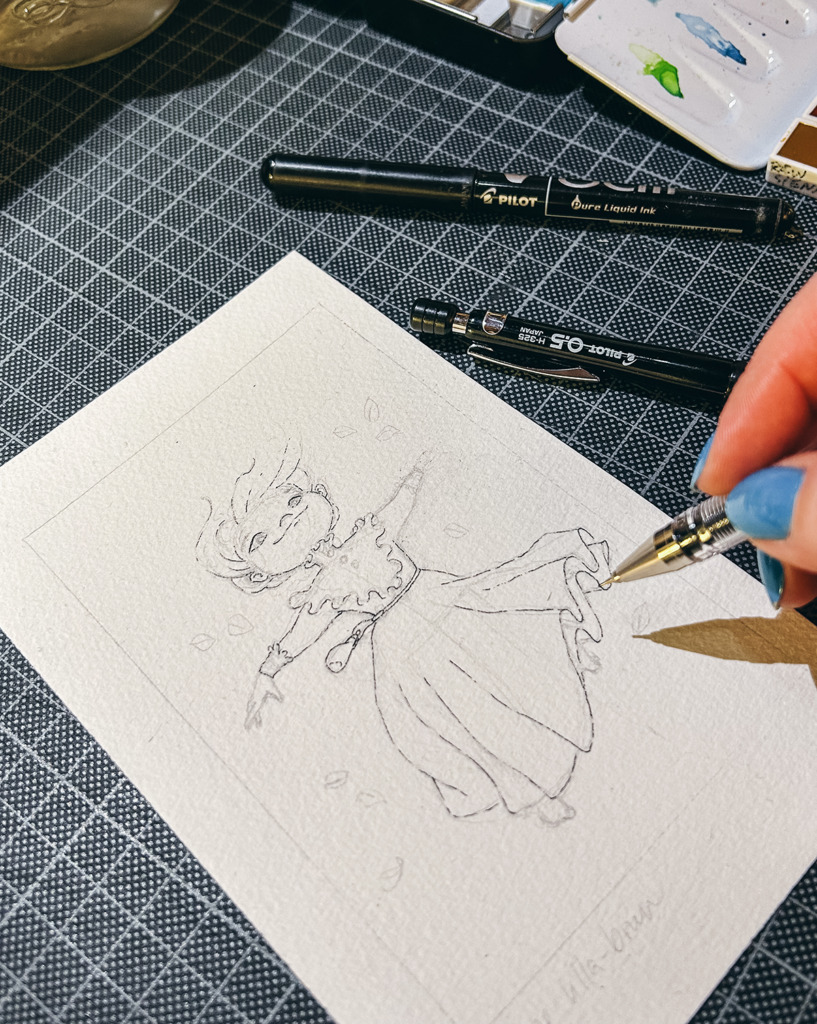
I use different pens and inks, depends on what I’m making. I use HB mechanical pencils and normal pencils for sketching. For fine line work I use Pilot G-tech C4 (sounds like a plane or explosives), and felt pens for lettering, usually Pilot. I also use paintbrushes and watercolours for lettering, and nib and ink for calligraphy.

Other tools
In addition to this I use masking fluid, metal rulers, scalpels, cutting mats and my light board for transferring sketches.
Software
I use Photoshop for scanning and cleaning up the illustrations, edit photos and all the bits and pieces for readying a drawing for use in a project.
Hardware
Mac in my studio, and PC in my home office. Bought a gaming PC to get enough machine power to power my larger projects.
Camera
For documenting work I use a Nikon Z50.

CV
Books
- Sissels Vuggesanger, Bonnier/TNT, 2025
- Agathe Backer Grøndahl, KODE art museum, 2025
- Livssorg i familien, Frisk Forlag, 2022
- Verden under Vann, Vigmostad & Bjerke, 2021
- SMAK!, Frisk Forlag, 2021
- Livssorg, Frisk Forlag, 2020
- Hvad himlen kan fortele os, Character Publishing, 2018
- Fantasiboka, Skald Forlag, 2015
- Sagnet om Trollveggen, Frittgående Fruers Forlag, 2013
- Monsterboka, Skald Forlag, 2013
- Champagnepiker, Skald Forlag, 2012
- Trøysteboka, Skald Forlag, 2011
- Eventyrboka, Skald Forlag, 2009
- Godnattboka, Skald Forlag, 2007
Stage/TV
- UiB/Alumni concert, 2018. Live illustration.
- TV2/Pandora Film, “Hagetid”, 2017. Illustrator and presenter.
- Moldejazz, “Monsterjazz”, 2014. Live illustration. This concert and illustration show was played at several other jazz festivals in Norway and Switzerland between 2014 and 2016.
- NRK Norge Rundt, “Nasjonal Vedkveld”, 2013. Live illustration.
- Festspillene i Bergen/Bergen International Festival, “Trollkrittet”, 2012. Actor, set design and live illustration.
Schools
- University of Cambridge, Creative Writing for Fiction and Performance, 2023–2025
- Kunsthøyskolen i Bergen, Visual Communication/Motion Graphics, 2006–2009
- Central St Martins College of Art & Design, Illustration & Printmaking, London, 2001–2003
- Foundation Course in Art & Design, Surrey University of Art & Design, 2000–2001
Apprenticeships/Other
- Mastering the Art of Signwriting, Liane Barker, 2020
- Wyvern Bindery, London. Book binder and prop maker, 2002–2003
Clients
NRK, TV2, Bergens Tidende, Festspillene i Bergen, Skald Forlag, 7Fjell Bryggeri, Frisk Forlag, GAN Aschehoug, Samlaget, Tall Ships Races, Galeasen Loyal, Boksalongen Litteraturhuset, Sissel Kyrkjebø, Fløybanen A/S, Vigmostad & Bjerke, Bonnier, KODE, and several other magazines and publishing houses.